
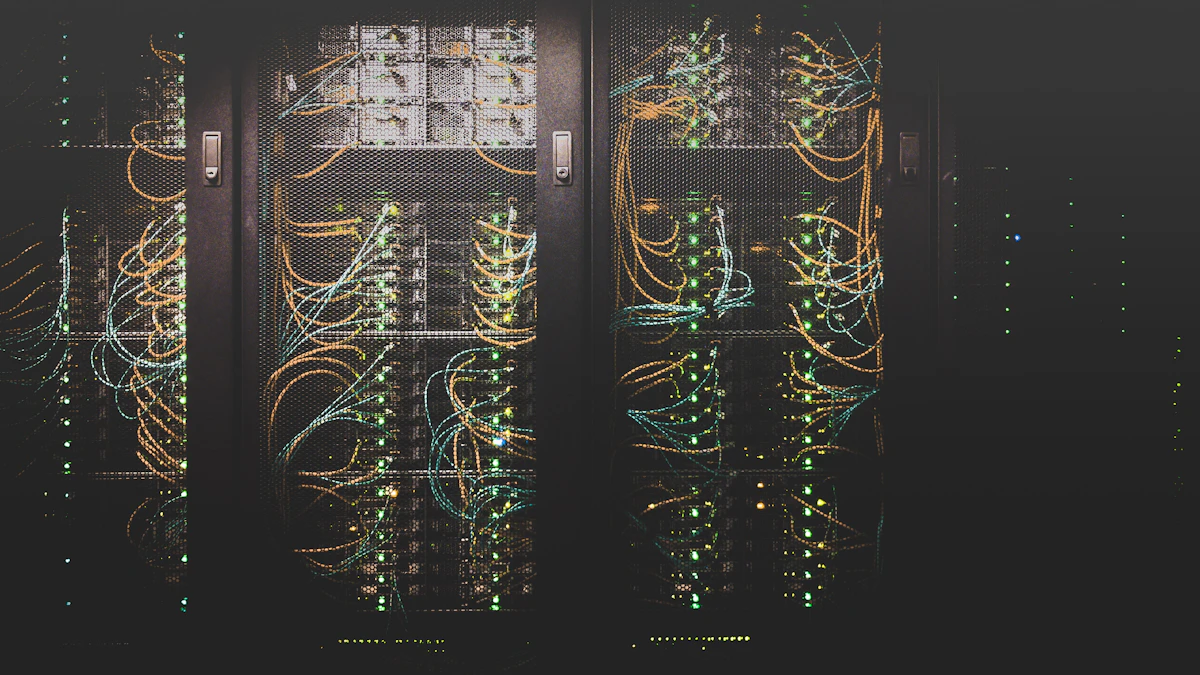
There is a simple reason compute matters: You cannot run AI without it. And the more capable AI becomes, the more important the underlying computational system becomes.
There is a simple reason compute matters:
You cannot run AI without it.
And the more capable AI becomes, the more important the underlying computational system becomes.
Compute is not one thing
There is training compute.
Inference compute.
Specialized accelerators.
General-purpose processors.
Edge compute.
Cloud compute.
Private compute.
Different workloads need different systems.
That creates an enormous market underneath AI applications.
Scarcity creates strategy
If compute is limited, companies need to secure it.
That can mean:
long-term contracts
dedicated infrastructure
cloud partnerships
data-center construction
custom chips
optimization
alternative architectures
The AI race therefore includes a supply-chain race.
And governments care
Compute is becoming strategically important enough that governments are paying increasing attention to semiconductor supply chains, AI infrastructure and access to advanced technology.
That means compute isn't simply a commercial resource.
It is increasingly connected to national competitiveness.
The next question
If intelligence becomes a fundamental input into the economy, then access to computation becomes analogous to access to other strategic infrastructure.
The important question becomes:
Who gets enough compute to build at scale?
What this means
This article is editorial analysis. Verify consequential claims against primary sources before relying on them as fact.
The question nobody asks
Which parts of this argument are documented fact, and which are analysis or uncertainty?
This article
The Coming Battle Over AI Compute
Omniv Editorial
More from Omniv Editorial
Other releases and work from this publisher
 Article
Why Taiwan Sits at the Center of the U.S.–China Relationship
A disruption in the Taiwan Strait would not stay in the Taiwan Strait. It could test the limits of U.S. policy, unsettle American allies, interrupt trade routes, and expose how much of the world’s advanced computing depends on production cl…
 Article
The Epstein Files: What Do the Documents Actually Tell Us?
The first thing to know about the Epstein files is that they are not one file, and they are not a verified list of perpetrators. They are a sprawling collection of records from criminal investigations, court proceedings, custody reviews, an…
 Article
The U.S. and China Are Talking Again. What Actually Changed?
In September, presidents Donald Trump and Xi Jinping met at the White House amid ceremonial pageantry and the familiar list of hard questions: tariffs, chips, rare-earth minerals, Taiwan and artificial intelligence. The clearest result was…
Keep this article or follow the publisher
Keep exploring
Related work stays discoverable — including older publications that still match this topic.
Entities
People, entities, and systems connected to this work.

This article
The Coming Battle Over AI Compute
Omniv Editorial
More from Omniv Editorial
Other releases and work from this publisher
ArticleWhy Taiwan Sits at the Center of the U.S.–China Relationship
A disruption in the Taiwan Strait would not stay in the Taiwan Strait. It could test the limits of U.S. policy, unsettle American allies, interrupt trade routes, and expose how much of the world’s advanced computing depends on production cl…
ArticleThe Epstein Files: What Do the Documents Actually Tell Us?
The first thing to know about the Epstein files is that they are not one file, and they are not a verified list of perpetrators. They are a sprawling collection of records from criminal investigations, court proceedings, custody reviews, an…
ArticleThe U.S. and China Are Talking Again. What Actually Changed?
In September, presidents Donald Trump and Xi Jinping met at the White House amid ceremonial pageantry and the familiar list of hard questions: tariffs, chips, rare-earth minerals, Taiwan and artificial intelligence. The clearest result was…
Keep this article or follow the publisher