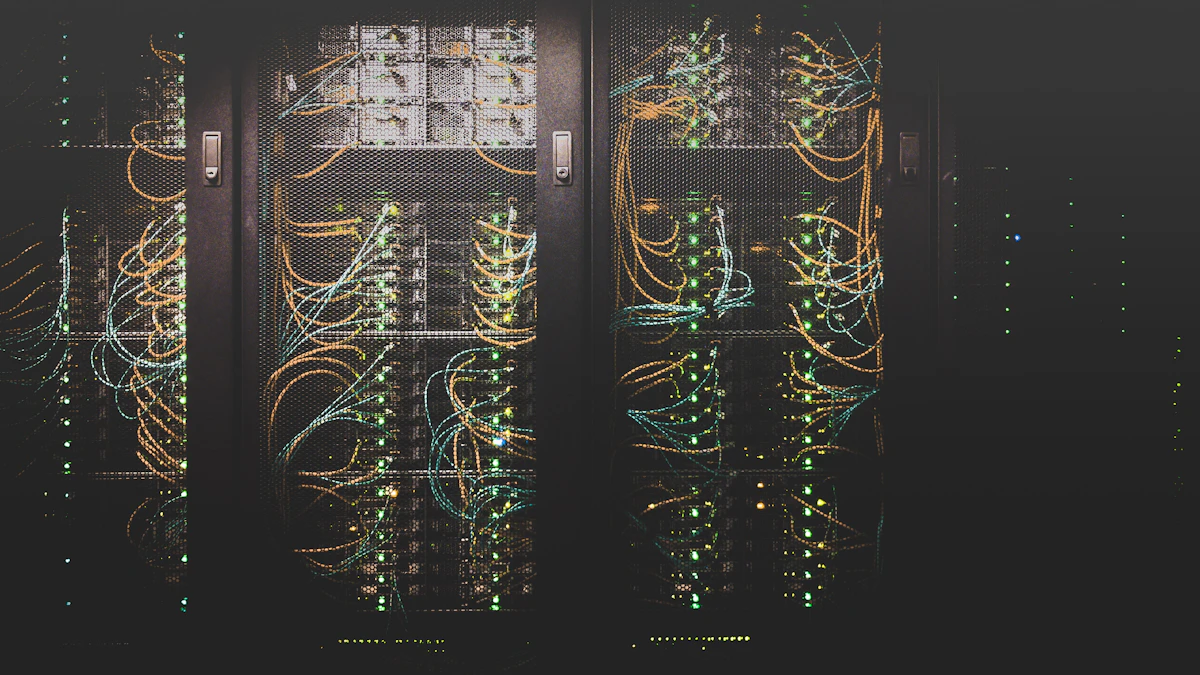
For most of the internet era, computing felt almost locationless. You could build a company in Lagos, host its application in Virginia, serve customers in London and have engineers working from Nairobi. The software did not care about borders.
For most of the internet era, computing felt almost locationless.
You could build a company in Lagos, host its application in Virginia, serve customers in London and have engineers working from Nairobi.
The software did not care about borders.
But the machines running that software do.
And as computing becomes more demanding, location is becoming important again.
A data center needs electricity.
It needs land.
It needs fiber.
It needs cooling.
It needs reliable infrastructure.
It needs access to hardware.
And it needs a political environment where billions of dollars can be invested over decades.
That means the next technology map may look very different from the map of the smartphone era.
The cloud has a geography
When someone says:
"It's in the cloud."
They are really saying:
"It's in a data center somewhere."
That "somewhere" matters.
A data center in a region with cheap, abundant electricity has a different economics from one sitting on an expensive or constrained grid.
A facility close to major fiber routes has different latency from one far away.
A facility located near customers can respond faster.
A facility in a politically stable jurisdiction may be easier to finance.
Suddenly geography enters the technology equation.
AI makes the problem bigger
Traditional web applications can often distribute workloads relatively efficiently.
AI can require enormous concentrations of computing power.
Training a frontier model can involve huge clusters of accelerators operating together.
Inference creates another challenge.
If millions of people use AI continuously, computation happens over and over again.
That creates demand for physical capacity.
The result is a new question:
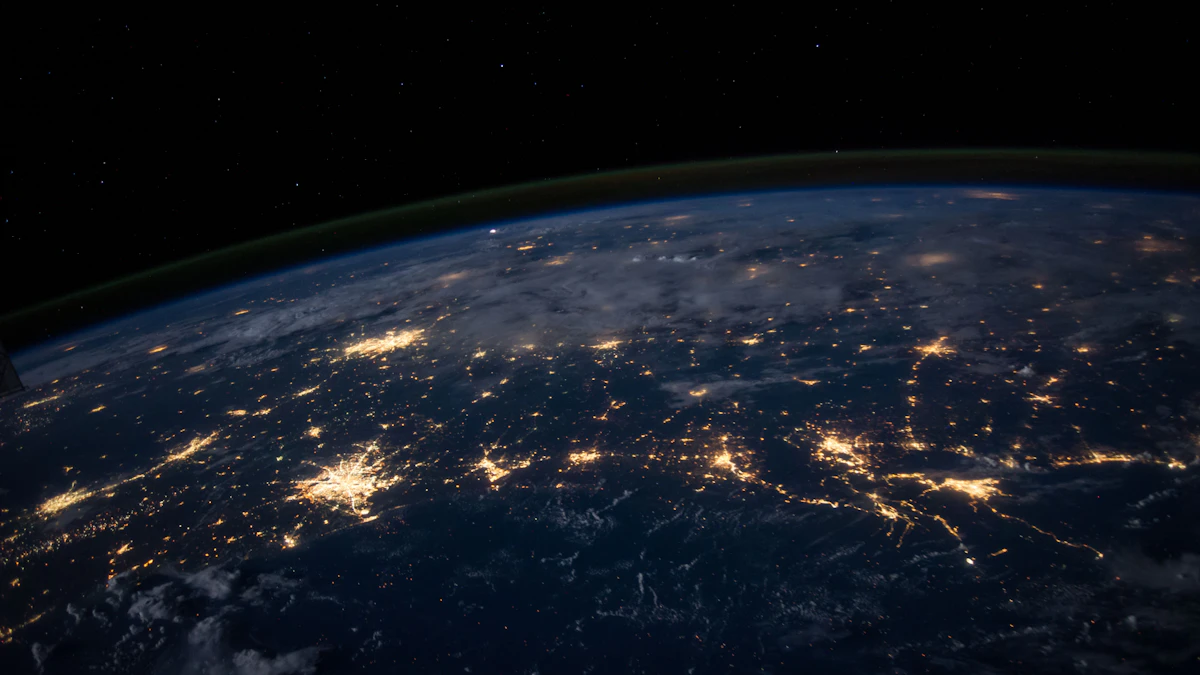
Where should the world's intelligence infrastructure live?
The answer will not be one country
Computing will likely become geographically distributed.
Some regions will specialize in enormous training facilities.
Others will become inference hubs.
Others will become semiconductor centers.
Others will provide energy.
Others will become connectivity hubs.
The result could be a global computing network that resembles an industrial supply chain.
Not one cloud.
A geography of clouds.
And this changes national strategy
Countries increasingly have reasons to care about where computing capacity is located.
AI can affect:
defense
research
finance
healthcare
communications
industrial production
government services
A country that relies entirely on foreign infrastructure may have less control over critical computational capacity.
That doesn't necessarily mean every country needs its own frontier model.
But it does mean countries are beginning to ask a different question:
How much of the computing layer should we control ourselves?
That question will shape technology investment for years.
What this means
This article is editorial analysis. Verify consequential claims against primary sources before relying on them as fact.
The question nobody asks
Which parts of this argument are documented fact, and which are analysis or uncertainty?
This article
The New Geography of Computing
Omniv Editorial
More from Omniv Editorial
Other releases and work from this publisher
ArticleWhy Taiwan Sits at the Center of the U.S.–China Relationship
A disruption in the Taiwan Strait would not stay in the Taiwan Strait. It could test the limits of U.S. policy, unsettle American allies, interrupt trade routes, and expose how much of the world’s advanced computing depends on production cl…
 Article
The Epstein Files: What Do the Documents Actually Tell Us?
The first thing to know about the Epstein files is that they are not one file, and they are not a verified list of perpetrators. They are a sprawling collection of records from criminal investigations, court proceedings, custody reviews, an…
 Article
The U.S. and China Are Talking Again. What Actually Changed?
In September, presidents Donald Trump and Xi Jinping met at the White House amid ceremonial pageantry and the familiar list of hard questions: tariffs, chips, rare-earth minerals, Taiwan and artificial intelligence. The clearest result was…
Keep this article or follow the publisher
Keep exploring
Related work stays discoverable — including older publications that still match this topic.
Entities
People, entities, and systems connected to this work.

This article
The New Geography of Computing
Omniv Editorial
More from Omniv Editorial
Other releases and work from this publisher
ArticleWhy Taiwan Sits at the Center of the U.S.–China Relationship
A disruption in the Taiwan Strait would not stay in the Taiwan Strait. It could test the limits of U.S. policy, unsettle American allies, interrupt trade routes, and expose how much of the world’s advanced computing depends on production cl…
ArticleThe Epstein Files: What Do the Documents Actually Tell Us?
The first thing to know about the Epstein files is that they are not one file, and they are not a verified list of perpetrators. They are a sprawling collection of records from criminal investigations, court proceedings, custody reviews, an…
ArticleThe U.S. and China Are Talking Again. What Actually Changed?
In September, presidents Donald Trump and Xi Jinping met at the White House amid ceremonial pageantry and the familiar list of hard questions: tariffs, chips, rare-earth minerals, Taiwan and artificial intelligence. The clearest result was…
Keep this article or follow the publisher