AI began as a software story. Algorithms. Neural networks.
AI began as a software story.
Algorithms.
Neural networks.
Models.
Applications.
But that description is becoming incomplete.
AI is increasingly an industrial technology.
Software sits at the top
The model is what users see.
You type a question.
You receive an answer.
You ask for an image.
It appears.
You give an AI an instruction.
It performs a task.
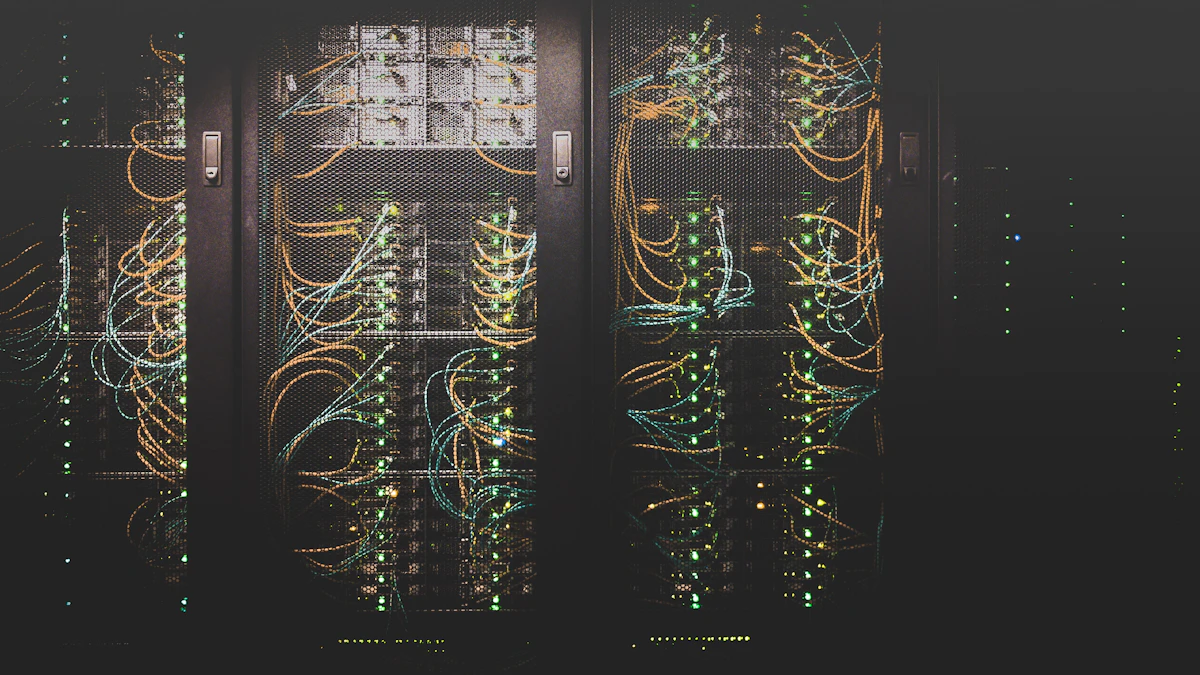
But underneath the interface are physical systems.
Servers.
Accelerators.
Memory.
Networking.
Cooling.
Data centers.
Electricity.
Then AI enters the physical world
The distinction becomes even clearer with robotics.
An AI generating text is software.
An AI controlling a warehouse robot is software operating through hardware.
An AI managing a factory is software interacting with machinery.
An autonomous vehicle is software controlling a physical object.
Now errors have physical consequences.
Latency matters.
Sensors matter.
Power matters.
Reliability matters.
The AI economy starts touching manufacturing directly.
That's why the AI market is bigger than AI companies
The opportunity includes:
chips
robotics
energy
cloud
networking
industrial automation
data centers
cybersecurity
software
logistics
manufacturing
AI isn't simply creating another software category.
It may become a general-purpose technology layer underneath many industries.
And when that happens, the companies benefiting from it won't all call themselves AI companies.
What this means
This article is editorial analysis. Verify consequential claims against primary sources before relying on them as fact.
The question nobody asks
Which parts of this argument are documented fact, and which are analysis or uncertainty?

This article
AI Is Not Just a Software Revolution
Omniv Editorial
More from Omniv Editorial
Other releases and work from this publisher
 Article
Why Taiwan Sits at the Center of the U.S.–China Relationship
A disruption in the Taiwan Strait would not stay in the Taiwan Strait. It could test the limits of U.S. policy, unsettle American allies, interrupt trade routes, and expose how much of the world’s advanced computing depends on production cl…
 Article
The Epstein Files: What Do the Documents Actually Tell Us?
The first thing to know about the Epstein files is that they are not one file, and they are not a verified list of perpetrators. They are a sprawling collection of records from criminal investigations, court proceedings, custody reviews, an…
 Article
The U.S. and China Are Talking Again. What Actually Changed?
In September, presidents Donald Trump and Xi Jinping met at the White House amid ceremonial pageantry and the familiar list of hard questions: tariffs, chips, rare-earth minerals, Taiwan and artificial intelligence. The clearest result was…
Keep this article or follow the publisher
Keep exploring
Related work stays discoverable — including older publications that still match this topic.
Entities
People, entities, and systems connected to this work.


This article
AI Is Not Just a Software Revolution
Omniv Editorial
More from Omniv Editorial
Other releases and work from this publisher
ArticleWhy Taiwan Sits at the Center of the U.S.–China Relationship
A disruption in the Taiwan Strait would not stay in the Taiwan Strait. It could test the limits of U.S. policy, unsettle American allies, interrupt trade routes, and expose how much of the world’s advanced computing depends on production cl…
ArticleThe Epstein Files: What Do the Documents Actually Tell Us?
The first thing to know about the Epstein files is that they are not one file, and they are not a verified list of perpetrators. They are a sprawling collection of records from criminal investigations, court proceedings, custody reviews, an…
ArticleThe U.S. and China Are Talking Again. What Actually Changed?
In September, presidents Donald Trump and Xi Jinping met at the White House amid ceremonial pageantry and the familiar list of hard questions: tariffs, chips, rare-earth minerals, Taiwan and artificial intelligence. The clearest result was…
Keep this article or follow the publisher