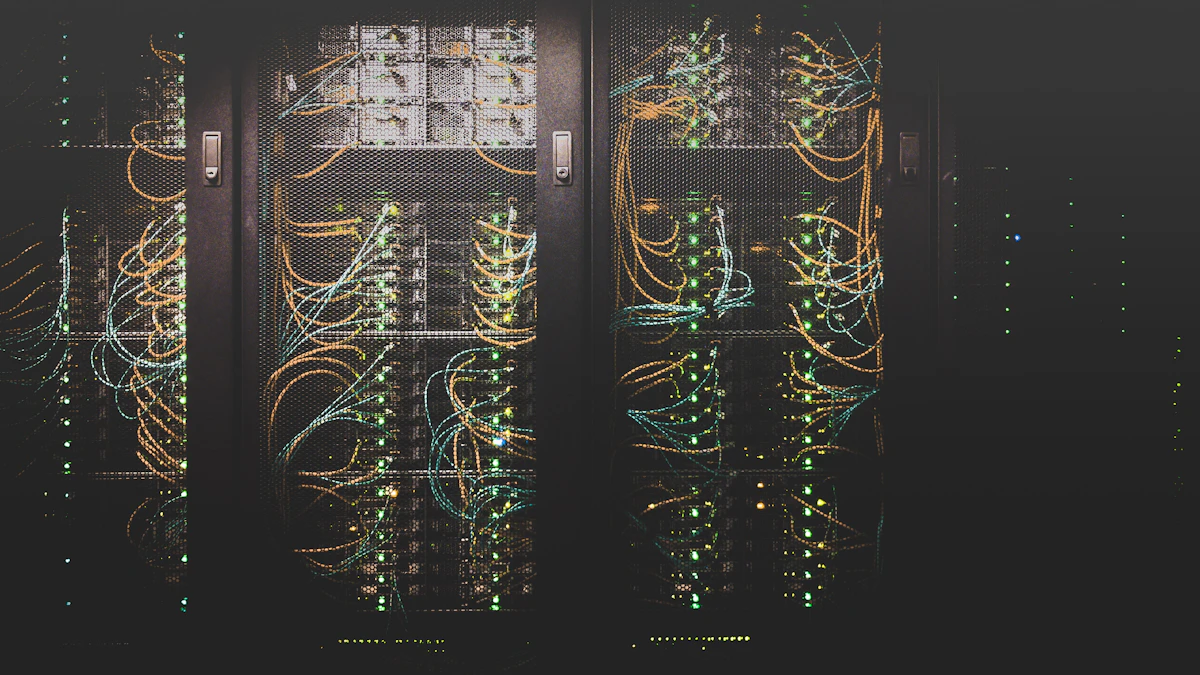
There is a seductive idea in AI: Build a smarter model and everything follows. But intelligence doesn't exist in isolation.
There is a seductive idea in AI:
Build a smarter model and everything follows.
But intelligence doesn't exist in isolation.
A model needs:
compute
data
energy
memory
networking
software
distribution
and increasingly, tools that allow it to act.
A smarter model can create more demand
Suppose a new model is twice as useful.
People use it more.
Companies integrate it into more workflows.
Agents run it continuously.
Robots use it.
Businesses automate additional processes.
The result?
More computation.
Better AI can therefore increase infrastructure demand.
The model is only one component
Consider a company building an AI coding system.
It needs:
models
inference infrastructure
databases
identity
security
developer tools
APIs
distribution
monitoring
The model may be the most visible component.
It isn't necessarily the whole product.
That's the opportunity
The biggest AI businesses may emerge around the model layer.
Companies that provide:
compute
data
security
orchestration
agents
specialized software
industry-specific infrastructure
could become extremely important.
The question isn't:
Who has the smartest model?
It's:
Who turns intelligence into something the economy can actually use?
What this means
This article is editorial analysis. Verify consequential claims against primary sources before relying on them as fact.
The question nobody asks
Which parts of this argument are documented fact, and which are analysis or uncertainty?

This article
Why AI Needs More Than Better Models
Omniv Editorial
More from Omniv Editorial
Other releases and work from this publisher
 Article
Why Taiwan Sits at the Center of the U.S.–China Relationship
A disruption in the Taiwan Strait would not stay in the Taiwan Strait. It could test the limits of U.S. policy, unsettle American allies, interrupt trade routes, and expose how much of the world’s advanced computing depends on production cl…
 Article
The Epstein Files: What Do the Documents Actually Tell Us?
The first thing to know about the Epstein files is that they are not one file, and they are not a verified list of perpetrators. They are a sprawling collection of records from criminal investigations, court proceedings, custody reviews, an…
 Article
The U.S. and China Are Talking Again. What Actually Changed?
In September, presidents Donald Trump and Xi Jinping met at the White House amid ceremonial pageantry and the familiar list of hard questions: tariffs, chips, rare-earth minerals, Taiwan and artificial intelligence. The clearest result was…
Keep this article or follow the publisher
Keep exploring
Related work stays discoverable — including older publications that still match this topic.
Entities
People, entities, and systems connected to this work.


This article
Why AI Needs More Than Better Models
Omniv Editorial
More from Omniv Editorial
Other releases and work from this publisher
ArticleWhy Taiwan Sits at the Center of the U.S.–China Relationship
A disruption in the Taiwan Strait would not stay in the Taiwan Strait. It could test the limits of U.S. policy, unsettle American allies, interrupt trade routes, and expose how much of the world’s advanced computing depends on production cl…
ArticleThe Epstein Files: What Do the Documents Actually Tell Us?
The first thing to know about the Epstein files is that they are not one file, and they are not a verified list of perpetrators. They are a sprawling collection of records from criminal investigations, court proceedings, custody reviews, an…
ArticleThe U.S. and China Are Talking Again. What Actually Changed?
In September, presidents Donald Trump and Xi Jinping met at the White House amid ceremonial pageantry and the familiar list of hard questions: tariffs, chips, rare-earth minerals, Taiwan and artificial intelligence. The clearest result was…
Keep this article or follow the publisher