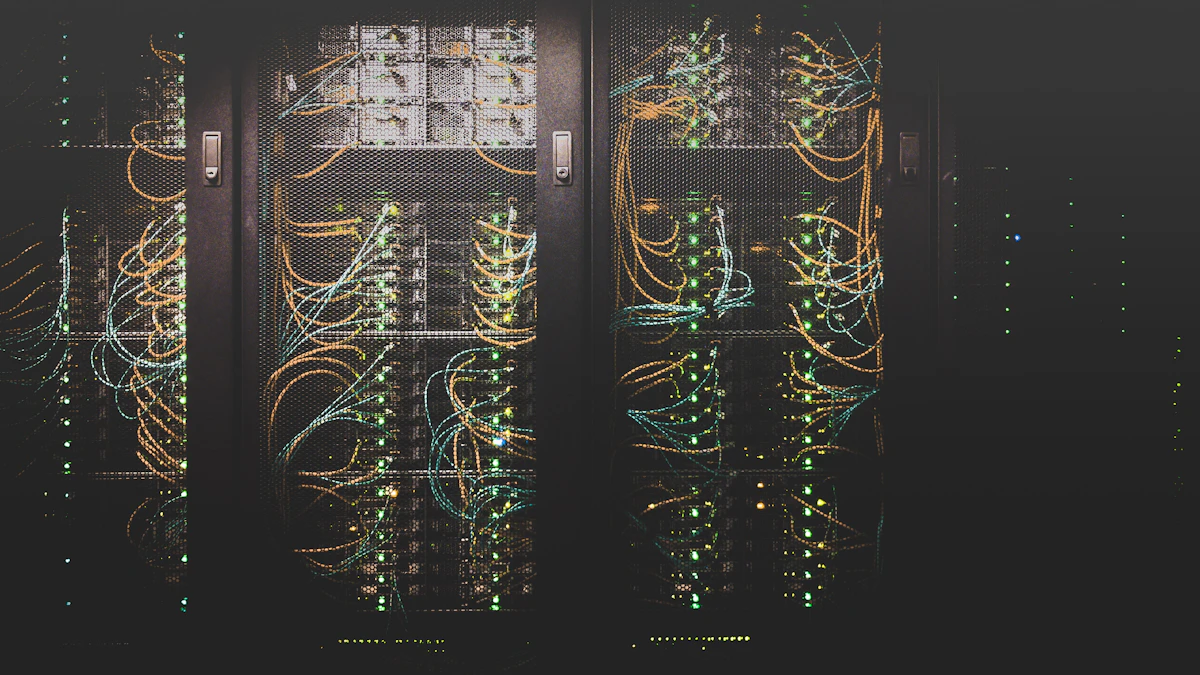
When people search for startup ideas, they usually look at screens. Apps. Websites.
When people search for startup ideas, they usually look at screens.
Apps.
Websites.
AI tools.
Marketplaces.
Social networks.
But some of the biggest opportunities aren't on the screen.
They're underneath it.
Inside the infrastructure everything else depends on.
Infrastructure creates invisible markets
Take electricity.
Everyone notices the device using electricity.
Few people think about everything required to deliver it:
generation,
transmission,
distribution,
storage,
maintenance,
metering,
financing,
monitoring,
backup power.
Every layer can become a business.
The same applies to:
internet,
payments,
logistics,
data centers,
food systems,
water,
transportation,
and manufacturing.
Find the bottleneck
One of the best ways to identify an infrastructure opportunity is to ask:
What is limiting the growth of everything else?
If businesses can't grow because electricity is unreliable, energy is a bottleneck.
If online commerce can't scale because delivery is unreliable, logistics is a bottleneck.
If AI companies can't expand because compute is scarce, compute infrastructure is a bottleneck.
If manufacturers can't expand because financing is unavailable, capital may be the bottleneck.
The bottleneck often becomes the business.
The most valuable infrastructure is often boring
A power transformer isn't exciting.
A warehouse isn't exciting.
A fiber route isn't exciting.
A payment-processing layer isn't necessarily exciting.
But if thousands of businesses depend on them, their economic importance can be enormous.
This is why entrepreneurs should learn to separate:
interesting
from
important.
The two are not the same.
Infrastructure can create recurring revenue
Infrastructure often has an attractive characteristic:
people repeatedly pay to use it.
Energy.
Connectivity.
Storage.
Payments.
Cloud computing.
Transportation.
Warehousing.
The asset may require substantial upfront investment.
But once operational, it can potentially generate recurring cash flows.
That makes infrastructure particularly interesting to long-term capital.
Infrastructure creates moats
Imagine two companies.
Company A sells a piece of software.
Company B owns critical physical infrastructure that customers depend on.
Which is harder to replace?
It depends.
But physical infrastructure can create significant barriers:
capital requirements,
permits,
land,
construction,
network density,
maintenance,
relationships,
and time.
Competitors cannot necessarily reproduce those assets overnight.
The infrastructure layer beneath AI
Consider artificial intelligence.
Everyone is talking about models.
But AI requires:
chips,
servers,
data centers,
electricity,
cooling,
networking,
storage,
and specialized infrastructure.
The AI application might change next year.
The underlying infrastructure may remain essential.
This is why entrepreneurs should ask:
What does the future industry need regardless of which company wins?
That's where infrastructure opportunities often appear.
Infrastructure can be digital too
Infrastructure isn't necessarily concrete.
APIs can be infrastructure.
Payment rails can be infrastructure.
Identity systems can be infrastructure.
Data networks can be infrastructure.
Cloud platforms can be infrastructure.
Discovery systems can become infrastructure.
The common characteristic is dependence.
If many businesses build on top of you, you stop being merely another product.
You become part of the system.
The startup hiding in the bottleneck
Here's a useful exercise.
Choose an industry.
Then map:
What enters the system?
↓
What happens inside?
↓
What leaves the system?
↓
Where does everything slow down?
↓
Where is money lost?
↓
Where does everyone depend on a fragile supplier?
↓
Where is information missing?
That map can reveal opportunities nobody sees when they're simply brainstorming app ideas.
What this means
This article is editorial analysis. Verify consequential claims against primary sources before relying on them as fact.
The question nobody asks
Which parts of this argument are documented fact, and which are analysis or uncertainty?

This article
The Startup Ideas Hiding Inside Broken Infrastructure
Omniv Editorial
More from Omniv Editorial
Other releases and work from this publisher
 Article
Why Taiwan Sits at the Center of the U.S.–China Relationship
A disruption in the Taiwan Strait would not stay in the Taiwan Strait. It could test the limits of U.S. policy, unsettle American allies, interrupt trade routes, and expose how much of the world’s advanced computing depends on production cl…
 Article
The Epstein Files: What Do the Documents Actually Tell Us?
The first thing to know about the Epstein files is that they are not one file, and they are not a verified list of perpetrators. They are a sprawling collection of records from criminal investigations, court proceedings, custody reviews, an…
 Article
The U.S. and China Are Talking Again. What Actually Changed?
In September, presidents Donald Trump and Xi Jinping met at the White House amid ceremonial pageantry and the familiar list of hard questions: tariffs, chips, rare-earth minerals, Taiwan and artificial intelligence. The clearest result was…
Keep this article or follow the publisher
Keep exploring
Related work stays discoverable — including older publications that still match this topic.
Entities
People, entities, and systems connected to this work.

This article
The Startup Ideas Hiding Inside Broken Infrastructure
Omniv Editorial
More from Omniv Editorial
Other releases and work from this publisher
ArticleWhy Taiwan Sits at the Center of the U.S.–China Relationship
A disruption in the Taiwan Strait would not stay in the Taiwan Strait. It could test the limits of U.S. policy, unsettle American allies, interrupt trade routes, and expose how much of the world’s advanced computing depends on production cl…
ArticleThe Epstein Files: What Do the Documents Actually Tell Us?
The first thing to know about the Epstein files is that they are not one file, and they are not a verified list of perpetrators. They are a sprawling collection of records from criminal investigations, court proceedings, custody reviews, an…
ArticleThe U.S. and China Are Talking Again. What Actually Changed?
In September, presidents Donald Trump and Xi Jinping met at the White House amid ceremonial pageantry and the familiar list of hard questions: tariffs, chips, rare-earth minerals, Taiwan and artificial intelligence. The clearest result was…
Keep this article or follow the publisher