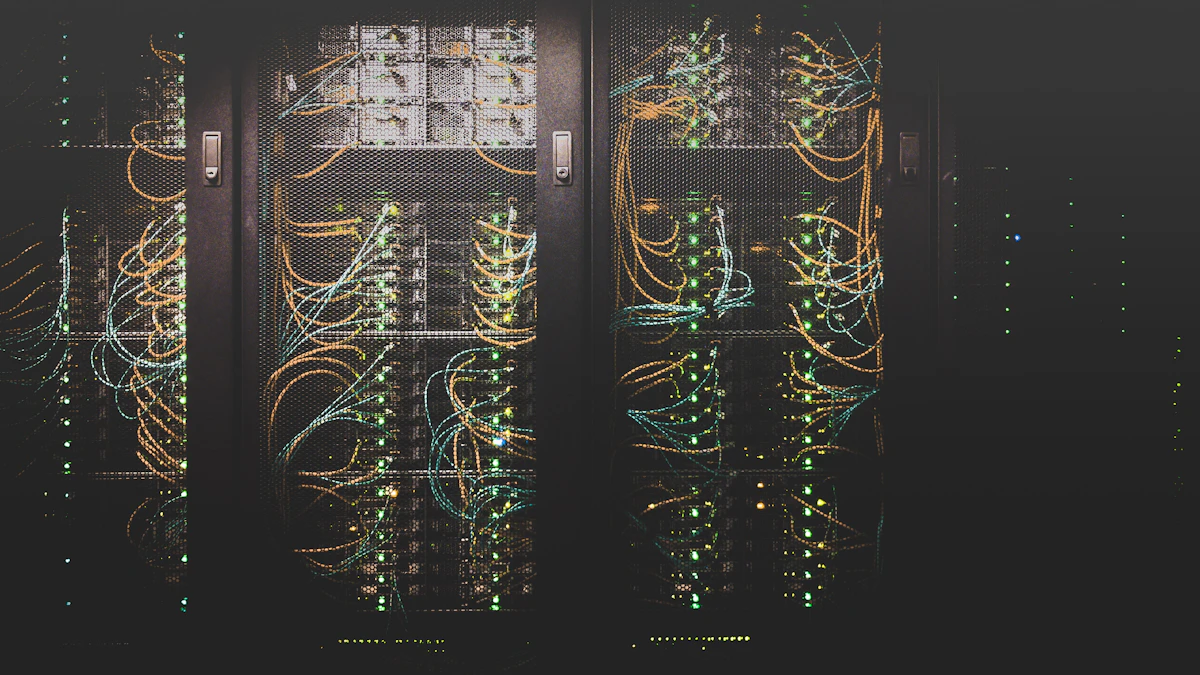
There is a visible technology war. AI companies compete. Cloud providers compete.
There is a visible technology war.
AI companies compete.
Cloud providers compete.
Chip companies compete.
But underneath them is another competition that receives far less attention.
The race to build the physical infrastructure required to support all of it.
Look at what AI actually needs
AI needs:
chips
which need:
semiconductor factories
which need:
specialized machinery
which needs:
materials and energy
Then the resulting chips need:
data centers
which need:
power
cooling
fiber
land
construction
Suddenly an AI race looks suspiciously like an industrial race.
The bottleneck is often boring
Technology history is full of bottlenecks that weren't glamorous.
A shortage of a component.
A factory that couldn't expand.
A shipping problem.
A lack of electricity.
A shortage of skilled workers.
A missing supplier.
The company with the best technology can still lose time if the physical system underneath it cannot scale.
That's why infrastructure can quietly become strategic.
The new industrial advantage
Countries that can combine:
energy
capital
manufacturing
technology
transport
connectivity
and talent
may have an enormous advantage.
The next generation of technology companies will therefore depend on industrial ecosystems much more than many software companies did in the previous era.
The question is no longer simply:
Who has the best technology?
It is:
Who can build enough of the physical world to deploy it?
What this means
This article is editorial analysis. Verify consequential claims against primary sources before relying on them as fact.
The question nobody asks
Which parts of this argument are documented fact, and which are analysis or uncertainty?

This article
The Infrastructure Wars Nobody Is Talking About
Omniv Editorial
More from Omniv Editorial
Other releases and work from this publisher
 Article
Why Taiwan Sits at the Center of the U.S.–China Relationship
A disruption in the Taiwan Strait would not stay in the Taiwan Strait. It could test the limits of U.S. policy, unsettle American allies, interrupt trade routes, and expose how much of the world’s advanced computing depends on production cl…
 Article
The Epstein Files: What Do the Documents Actually Tell Us?
The first thing to know about the Epstein files is that they are not one file, and they are not a verified list of perpetrators. They are a sprawling collection of records from criminal investigations, court proceedings, custody reviews, an…
 Article
The U.S. and China Are Talking Again. What Actually Changed?
In September, presidents Donald Trump and Xi Jinping met at the White House amid ceremonial pageantry and the familiar list of hard questions: tariffs, chips, rare-earth minerals, Taiwan and artificial intelligence. The clearest result was…
Keep this article or follow the publisher
Keep exploring
Related work stays discoverable — including older publications that still match this topic.
Entities
People, entities, and systems connected to this work.


This article
The Infrastructure Wars Nobody Is Talking About
Omniv Editorial
More from Omniv Editorial
Other releases and work from this publisher
ArticleWhy Taiwan Sits at the Center of the U.S.–China Relationship
A disruption in the Taiwan Strait would not stay in the Taiwan Strait. It could test the limits of U.S. policy, unsettle American allies, interrupt trade routes, and expose how much of the world’s advanced computing depends on production cl…
ArticleThe Epstein Files: What Do the Documents Actually Tell Us?
The first thing to know about the Epstein files is that they are not one file, and they are not a verified list of perpetrators. They are a sprawling collection of records from criminal investigations, court proceedings, custody reviews, an…
ArticleThe U.S. and China Are Talking Again. What Actually Changed?
In September, presidents Donald Trump and Xi Jinping met at the White House amid ceremonial pageantry and the familiar list of hard questions: tariffs, chips, rare-earth minerals, Taiwan and artificial intelligence. The clearest result was…
Keep this article or follow the publisher